
How to Learn Algebra Without Memorizing Everything
A complete student guide to learning algebra through concepts, examples, practice routines, and mistake review instead of blind memorization.
Introduction
Algebra is often the first place where mathematics begins to feel abstract. Numbers are still present, but letters, symbols, and rules start appearing beside them. The good news is that algebra is not a secret language. It is a way to describe patterns and unknown values clearly.
This guide explains algebra basics in a student-friendly way. You will learn what variables mean, why equations work like balance scales, how expressions are simplified, and how to practice without getting lost. The focus keyword, how to learn algebra, appears naturally because the real goal is learning a method, not memorizing a list of tricks.
Overview
A strong approach to how to learn algebra begins with a clear overview. Students should know what the topic means, where it appears in school learning, and how it connects to exams and daily thinking. This prevents random study and gives each lesson a purpose.
The best learning path is simple: understand the idea, see an example, practice carefully, and review mistakes. This method works for beginners because it builds confidence in small steps. It also keeps secondary keywords such as algebra basics and algebra for beginners connected to useful explanations.
Definitions
Algebra is a branch of mathematics that uses symbols, usually letters, to represent numbers and relationships. A variable such as x can stand for an unknown value, a changing value, or a value that depends on another quantity. An expression shows a calculation, while an equation says that two expressions are equal.
Important Terms
- Variable: a symbol that represents a value.
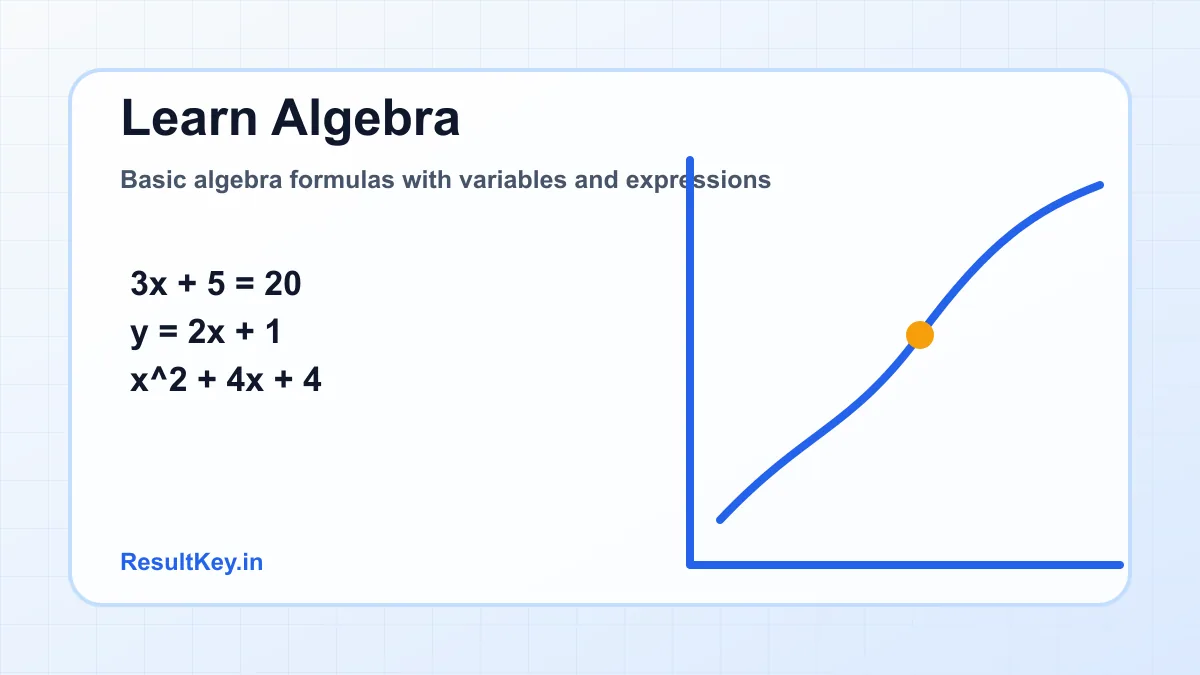
- Expression: a mathematical phrase such as 3x + 5.
- Equation: a statement that two sides are equal.
- Coefficient: the number multiplying a variable.
- Like terms: terms that have the same variable part.
- Solution: the value that makes an equation true.
Students should write definitions in their own words after reading them. A copied definition may help in a short answer, but a self-written explanation shows real understanding. Use textbook language for exams, then add your own example beside it.
Why It Is Important
Algebra matters because it teaches logical thinking. It helps students solve word problems, understand graphs, study science formulas, and prepare for competitive exams. Once you understand algebra, many later topics such as geometry, physics, statistics, and programming become easier to approach.
This topic also builds habits that support independent study. When students learn how to learn algebra properly, they improve attention, reasoning, and the ability to explain answers. These habits are useful in school tests, board exams, entrance preparation, and real learning beyond marks.
Key Concepts
Core Ideas to Remember
| Concept | Student-friendly meaning |
|---|---|
| Variable | a symbol that represents a value. |
| Expression | a mathematical phrase such as 3x + 5. |
| Equation | a statement that two sides are equal. |
| Coefficient | the number multiplying a variable. |
| Like terms | terms that have the same variable part. |
Do not try to master every concept in one sitting. Read one idea, solve or explain one example, and then move to the next. Short active sessions usually work better than long passive reading.
Detailed Explanation
How the Topic Works
The detailed explanation of how to learn algebra should always move from simple to complex. First, notice the basic pattern. Next, connect the pattern with terms and examples. Finally, apply the idea to a question where the answer is not obvious at first.
This order matters because beginners often jump directly to difficult questions. When the foundation is weak, even a small change in wording creates confusion. A patient sequence helps students see the logic behind the answer.
Examples
Simple algebra example
If 3x + 4 = 19, subtract 4 from both sides to get 3x = 15. Then divide both sides by 3. The answer is x = 5. You can check it by placing 5 back into the original equation: 3 × 5 + 4 = 19.
After reading an example, cover the solution and try to solve it again. This small habit changes reading into active recall. It also shows whether you understood the method or only recognized the answer.
Step-by-Step Guide
- Begin with number patterns before symbols.
- Learn the meaning of variables, constants, and terms.
- Practice simplifying expressions with like terms.
- Solve one-step equations, then two-step equations.
- Translate short word problems into equations.
- Check every answer in the original question.
Follow these steps for at least two weeks before judging the method. Learning improves when the same routine is repeated long enough to reveal progress. Keep your plan visible on paper or in a simple notes app.
Best Practices
- Write each step on a separate line.
- Use inverse operations carefully.
- Keep equal signs aligned.
- Review mistakes in a notebook.
- Practice ten focused questions daily.
Best practices are small actions that protect your time. They reduce confusion, make revision easier, and help you notice mistakes early. Students who follow a simple process usually improve faster than students who keep changing methods.
Common Mistakes
- Moving a number to the other side without changing the operation.
- Combining unlike terms such as x and x squared.
- Forgetting to divide every term by the same number.
- Skipping the answer check.
- Trying hard problems before mastering basics.
Mistakes are not proof that you are weak. They are information. Write the error, the correct method, and one fresh example. This turns a wrong answer into a useful revision tool.
Tips for Better Learning
- Say the equation in words.
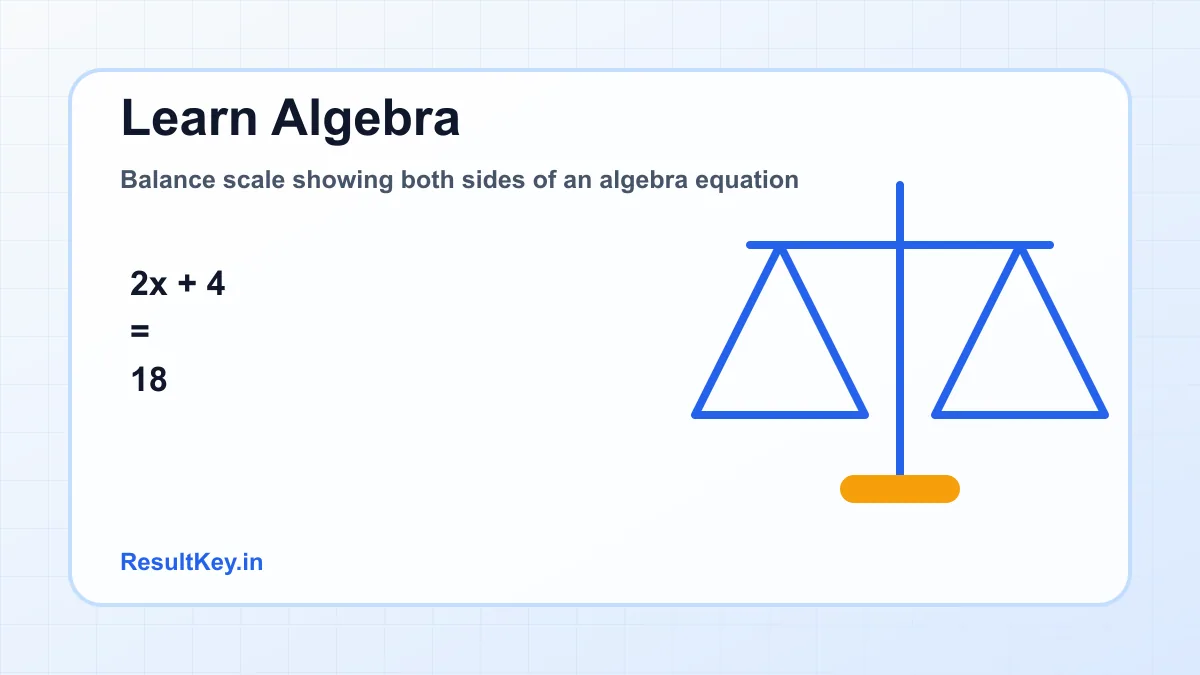
- Draw a balance scale for difficult equations.
- Use small numbers to test formulas.
- Teach one solved example to a friend.
- Mix old and new questions during revision.
These tips make how to learn algebra easier to revise. Use them with a realistic timetable. A crowded routine may look impressive, but a simple routine followed daily produces better results.
Advantages
- Builds problem-solving confidence.
- Supports science and exam preparation.
- Improves logical thinking.
- Makes patterns easier to describe.
Disadvantages and Limits
- It can feel abstract at first.
- Small sign errors can change the answer.
- Students may rush if they memorize rules without meaning.
Every topic has limits, and knowing them is part of mature learning. Students should not expect one article, one video, or one worksheet to solve everything. Use this guide as a structured base and keep improving through practice.
Helpful Resources
For school-level learning, start with your official textbook, teacher notes, and syllabus. NCERT textbooks, state board books, official exam notifications, and recognized educational institutions are reliable starting points. Use online resources only after checking that they match your class level and curriculum.
When algebra feels confusing, return to the meaning of the symbols. Meaning is stronger than memorization.
ResultWeb Editorial Team
Summary
Algebra becomes manageable when you treat it as a language for relationships. Learn the meaning of variables, keep equations balanced, practice in short daily sessions, and check answers carefully.
In short, how to learn algebra becomes easier when students study with structure. Learn the meaning, practice with examples, revise regularly, and ask questions when a step feels unclear.
A helpful algebra routine also includes mixed revision. Do not solve only the same type of equation again and again. Mix simplification, substitution, word problems, and graph-based questions so your brain learns to identify the method from the question, not from the chapter heading.
If you use external resources, choose ones that explain steps clearly. Official school textbooks, NCERT-style examples, teacher worksheets, and well-structured practice books are better than random shortcuts. Shortcuts are useful only after the concept is strong.
Conclusion
The best answer to how to learn algebra is simple: understand the idea, solve gradually, and review mistakes honestly. With steady practice, algebra changes from a difficult subject into a useful thinking tool.
The next step is simple: choose one section from this guide, make short notes, and practice today. Small action is better than waiting for the perfect study mood.
Frequently Asked Questions
Students ask this because how to learn algebra can feel wide at first. The best answer is to begin with the basic meaning, study one example, and then practice a few questions with feedback. Keep your textbook or teacher notes nearby so your learning stays aligned with the syllabus. After each practice session, write one thing you understood and one doubt you still have. This habit makes revision clearer and prevents last-minute confusion.
ResultWeb Editorial Team
Educational writers focused on clear explanations, practical revision systems, and student-friendly learning resources.
Get smarter study notes weekly
Join the ResultWeb.in learning list for practical guides, exam strategy, and resource updates.
Related Posts

The History of India: A Student-Friendly Timeline
Understand Indian history through a clear timeline from ancient civilizations to independence, with themes, examples, and study tips.
Mastering Physics Formulas With Meaning
Learn physics formulas with meaning by connecting symbols, units, diagrams, derivations, and numerical examples.
Chemistry Periodic Table Guide for Beginners
Learn how the periodic table is organized and how groups, periods, valency, and trends help you predict element properties.
Biology Cell Structure Explained Simply
Understand cell structure through organelles, functions, plant and animal cell comparison, diagrams, examples, and revision tips.
English Comprehension Skills That Improve Scores
Improve reading comprehension with skimming, scanning, inference, vocabulary, evidence-based answers, and exam-ready practice.

Mastering Calculus Basics: A Step-by-Step Tutorial
Understand calculus basics through limits, derivatives, integration rules, examples, and revision tips.